Hello and welcome to Reigate College’s Photography Department.
My name is Kristina Sinclair and I’m the Course Leader for Photography A Level. Before I welcome you to our department in person at the beginning of the academic year, I’d like you to complete a mini Photography project.
I’m keen for you to work your way through the tasks below so that when we meet in September, we can look at the work you’ve produced and discuss what you’ve learnt.
The tasks are organised in three distinct steps and should all be completed by Choices Day on 25 August 2026. This is to give you the best insight into what the courses will be like and/or help prepare you for them.
Please note, some Course Leaders (for example for Music) may release their tasks earlier, as they may form part of the College’s audition process. If this applies to you, you’ll be notified separately.
New Starters Course Tasks and Activities
| Release date | Suggested Completion Dates | |
| Explore your Subject | 1 June | 1 July |
| Get Going | 1 June | 1 August |
| Aim High | 1 June | 1 September |
Transforming Mundane into Extraordinary: Introductory Photography Project
Many contemporary photographers focus on transforming the ‘mundane’ into ‘extraordinary’ through their camera lens.
They photograph the everyday and the overlooked in such a way that the resulting images are visually captivating, often mysterious and intended to stimulate the viewer’s imagination.
To begin with, I would like you to:
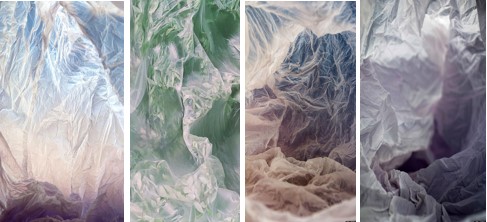
Research Magical Landscapes by the contemporary photographer Vilde J. Rolfsen (examples of the images from a 2017 photographic series by the artist are below).
Find out how and why these images were produced and have a go at creating similar photographs yourself.
Hello again. I hope you enjoyed researching the work of Vilde J. Rolfsen and were able to create some amazing photographs inspired by her work!
Next I would like you to identify another renowned photographer who transforms the ‘mundane’ into ‘extraordinary’ in their work.
Find one piece of work by that photographer.
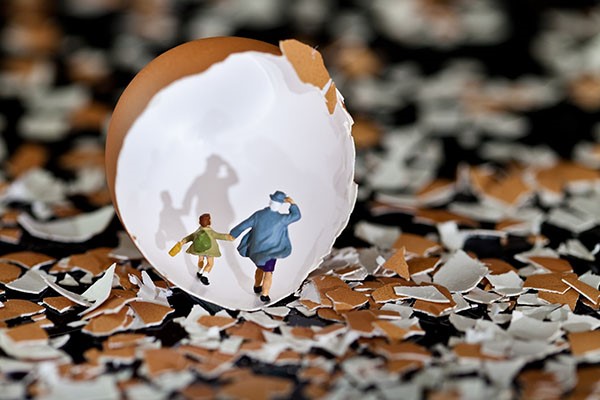
Find out how it was made and visually respond to it. Your visual response should not be an exact copy of the artist’s work but influenced and inspired to use a similar composition, subject matter or technique, as it should demonstrate your understanding of how the artist’s work was made.
Below is an example of a student’s visual response (right) next to the work of the artist (left) they were responding to:
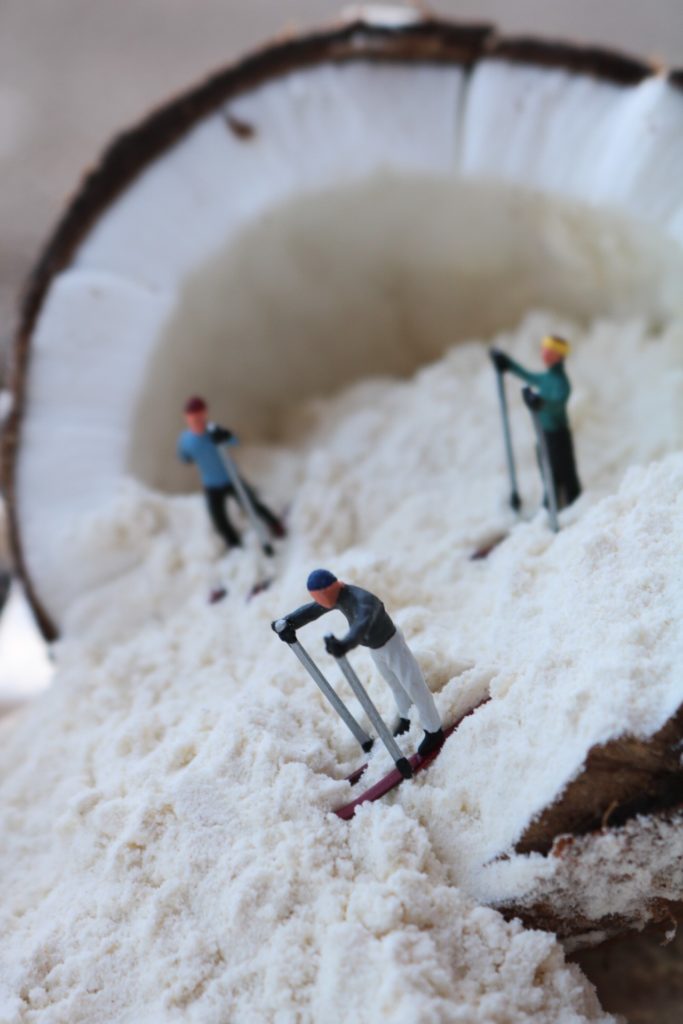
I hope you were able to find an inspiring image by a renowned photographer and are happy with your recreation.
Now, I would like you to do the following:
- Take 5 or more photographs that transform everyday reality into an extraordinary spectacle
- Annotate your images and explain the process you used to create the images and how you were inspired by the artist’s ideas and style
- Save all the work you created for this project either as a Word document or a PowerPoint presentation. The work should include a) A copy of the image you chose to recreate; b) your recreation of the image, c) your own three photographs and your explanations about how you created them
Below is an example of an image I took to help you with this exercise and a brief explanation of the process of the making of it:
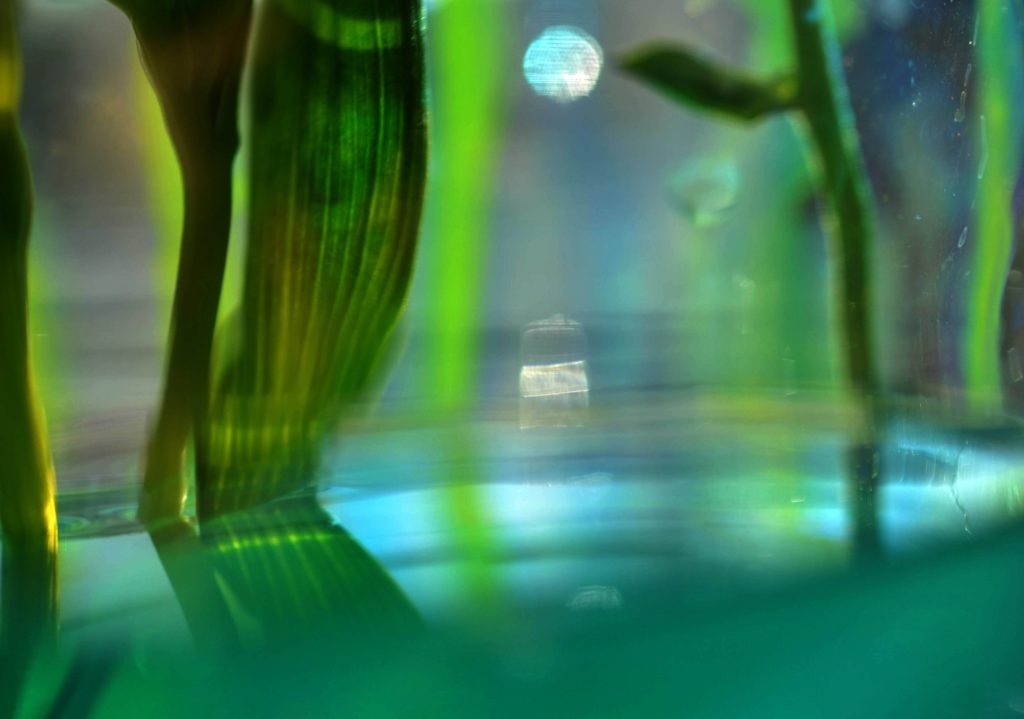
In order to create this image I placed some tulip stems in a glass filled with water and a little bit of green food dye mixed into it and positioned my still life on a window sill.
I took the photo on a DSLR camera equipped with a standard lens. I opened the lens wide to achieve a shallow depth of field and focussed it on the front of the glass, this allowed for the so called bokeh effect turning the droplet of water on the back of the glass into a diffused circular shape; the scene was back lit as I positioned the glass on a window sill and photographed it from the inside of the room.
I cropped the image through the viewfinder so that you cannot see the glass edge, this makes the subject of the photo (tulips in a glass) less obvious therefore inviting more abstract interpretation. What I saw when I looked back at the photograph was what I called the image, ‘Moon over a Forest Lake’. What can you see?
See you in September and please bring your work to your first Photography Lesson at Reigate College.
Extension Task
Research the so called bokeh effect.

Course Leader – Photography A Level