I really enjoyed being part of a diverse community of students at College. It was a great opportunity to meet people from different schools and backgrounds, studying a wide range of subjects. College was an excellent stepping-stone between school and university, teaching me to manage my own time and work independently. The Aspire programme helped me focus on university applications while developing the self-learning and critical thinking skills that are crucial for life after College. Meanwhile, the sports and societies on offer provided some much-needed balance from academic life!
After leaving College, I studied Biological Sciences at Durham University. I really enjoyed the weekly lab sessions, translating the theory I had learnt in lectures into practical applications. In my first year, I applied for summer internships to gain more experience, but was unsuccessful: Don’t let this discourage you, as things don’t always fall into place first time! I decided I wanted to pursue a career in research and transferred to an integrated master’s course. During my 4th year, I joined one of Durham’s research groups, which gave me invaluable hands-on experience and deepened my interest further.
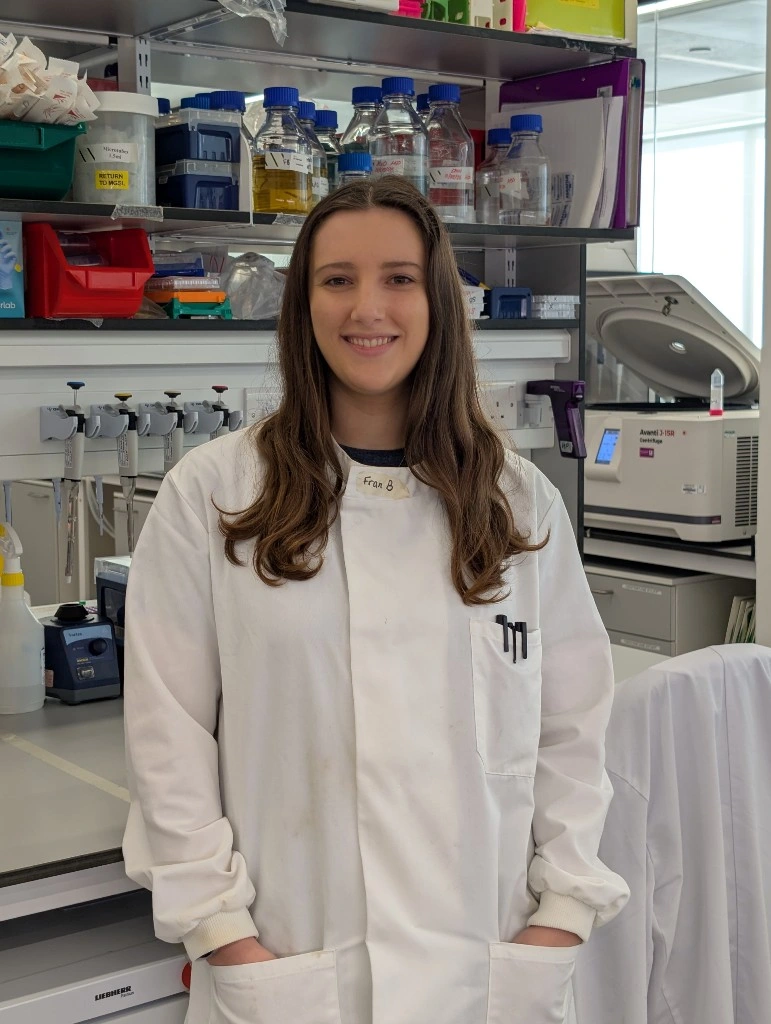
Since graduating, I have worked in labs at both Oxford Brookes and Oxford University, researching topics such as human ageing, Lyme Disease and most recently malaria. Working in a lab is a unique experience, and I really enjoy both the practical and academic aspects of the job. Every day is different, and whilst the job is challenging, knowing the work you do is having a real-world impact is incredibly motivating.
In my current lab role at Oxford University I’m part of the team developing novel vaccines against malaria. This means I study malarial proteins and human antibodies to identify new vaccine targets. My days consist of running experiments in the lab, but I also spend time analysing data, reading research papers and preparing presentations to share results with funders and other research groups.
It’s never too early to start thinking about careers. Although it may seem far off, your time at College really does fly by! Talk to the Careers team and do your own research early so that you are prepared when it’s time to apply for universities or apprenticeships.
If you are interested in a career in scientific research, my advice would be to get as much experience as possible: Apply to internships, attend lectures or talks, and gain hands-on work experience if you can. Even if, like me, you aren’t successful first time, you’ll gain valuable experience in the application process, which will help you in the future.
Reading around your subject is also essential. As a researcher, I spend a lot of time reading and understanding scientific literature. Get comfortable reading research papers, articles or books on topics that interest you, and be prepared to talk about those interests. Completing an EPQ proved an excellent way to develop university-level skills whilst researching a topic outside of my A Level syllabus. Universities and employers want to see that you are genuinely interested in the subject, and demonstrating this through independent research makes you a stronger candidate.
Finally, do take advantage of the extra opportunities that College offers outside of your academic work. Sports, music and other clubs are a great way to learn new skills and connect with people outside of lessons, so make sure you take time out to enjoy yourself too!
Francesca Byrne
Reigate College: 2016-2018
Higher Education: MSc Biosciences, Durham University
Currently: Research Scientist, University of Oxford